Vancouver Corporate Roadshow Transportation: A Practical Planning Guide
October 2, 2026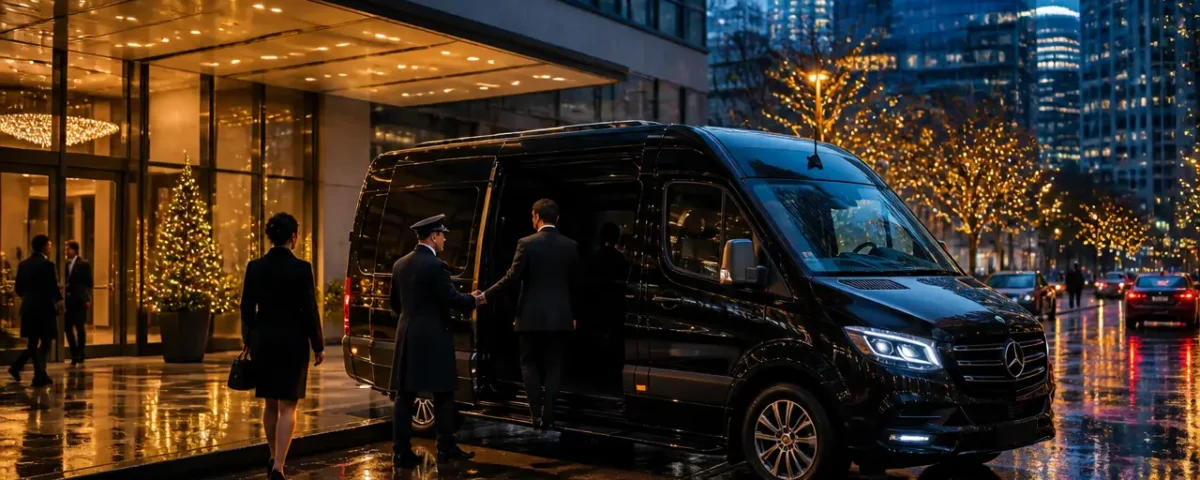
Corporate holiday party transportation in Vancouver should be planned before the guest list is final. December evenings create concentrated demand, downtown traffic can complicate curb access, and a party involving alcohol needs a clear plan for getting everyone home safely. For a December 2026 event, start with the date, approximate headcount, venue access instructions, and expected return window rather than waiting for every detail to be confirmed.
Why December transportation needs extra coordination
A holiday party may involve several moving parts: employees leaving different offices, guests arriving from the airport, a dinner at one venue followed by an activity elsewhere, and staggered departures after the formal program ends. Rain, darkness, congestion, collisions, and snow on higher-elevation routes can also affect travel time.
Build time into the itinerary instead of promising a precise arrival minute. For events involving North Shore venues, Squamish, Whistler, or other mountain routes, check DriveBC on the day for road conditions, highway cameras, closures, and travel advisories. British Columbia’s winter tire or chain requirements apply on signed routes from October 1 through April 30, although some routes have different end dates.
Match the vehicle to the group and itinerary
The right vehicle depends on passenger count, luggage, pickup locations, and whether guests want to travel together between venues. Ask the transportation provider to recommend a vehicle plan based on your actual manifest rather than choosing solely by appearance.
- Executive sedans: appropriate for senior leaders, VIP guests, or small groups requiring direct transportation.
- SUVs: useful for small teams, airport-connected guests, luggage, or itineraries with several stops.
- Sprinter-style vans or minibuses: practical for department groups travelling together without splitting into many cars.
- Party buses: best considered when onboard social space is part of the event and the route, stops, and venue access can support a larger vehicle.
Do not estimate capacity from a generic online photo. Confirm the current fleet, passenger limits, luggage space, accessibility options, hourly minimums, and any restrictions on food or beverages before approving the reservation.
Build a guest transportation plan
Create one working manifest for the event coordinator and transportation provider. It should include each passenger’s name, mobile number, pickup address or meeting point, preferred departure window, luggage requirements, and any accessibility needs. Group nearby addresses where practical, but avoid adding so many stops that the first passengers spend most of the evening in the vehicle.
For a downtown party, identify one transportation coordinator who can answer questions on the night. Give that person the final vehicle assignments, chauffeur contact information, venue instructions, and a backup plan for guests who leave later than expected. If the event has multiple return waves, write those windows into the itinerary rather than treating them as an informal arrangement.
The same process used for other large celebrations can help with a corporate event. Limo Vancouver’s group-event transportation planning resource offers a useful reminder to organize passenger numbers and vehicle needs before the event date, even though the occasion is different.
Confirm downtown loading and venue access
Ask the venue for an approved loading location, the best approach route, maximum stopping time, and a contact person who will be available when vehicles arrive. Commercial loading zones and lanes in Vancouver can involve permits and restrictions; downtown also includes commercial lanes where a driver should not assume stopping is permitted. The City of Vancouver’s commercial loading guidance should be reviewed alongside the venue’s own instructions.
Canada Place and waterfront hotels deserve special attention. The City says vehicle circulation at Canada Place became one-way westbound from Howe Street to Burrard Street in April 2025. For a December 2026 event, confirm the current approach route with the venue and chauffeur before the final itinerary is issued, since traffic patterns and access instructions may change.
North Shore companies planning a party at a West Vancouver restaurant, hotel, or private venue may also want to review this West Vancouver limousine service resource when comparing route and vehicle considerations. The practical questions remain the same: where can the vehicle load, how long may it wait, and who coordinates the handoff?
Make the safe ride home part of the event
If alcohol will be served, transportation should be included in the event plan from the beginning. Tell guests which rides are covered, where the vehicles will depart, when the final scheduled return leaves, and whom to contact if plans change. A chauffeur service can help guests avoid driving after drinking, but the employer or host should still provide a backup option for late departures or unexpected changes.
ICBC recommends planning a safe ride home in advance and identifies options such as taxis, rideshare, transit, and designated drivers. Hosts serving alcohol can also review ICBC’s Special Event Kit for additional event-planning guidance. A transportation booking is one part of the plan; clear communication to employees is just as important.
Plan airport-connected arrivals correctly
If guests are flying into Vancouver for the party, record their flight details, arrival type, mobile number, and expected luggage. YVR uses different pickup instructions depending on whether passengers arrive domestically, from the United States, or internationally. Domestic passengers use Door 24 on Level 1 Airport Services Plaza. U.S. and international passengers follow the International and USA arrivals route, with passengers directed from International Arrivals Door 17. YVR directs waiting vehicles to its free Cell Phone Waiting Area on Aviation Avenue; pickup areas are intended for immediate loading.
Give each traveller a clear meeting point and instruct them to call the transportation coordinator when they are ready. Confirm the provider’s current waiting and flight-monitoring procedures instead of assuming that a vehicle can wait indefinitely at the curb.
A workable booking timeline for December 2026
- Eight to 12 weeks out: estimate attendance, shortlist vehicle types, and reserve the date.
- Four to six weeks out: confirm venue loading instructions, pickup clusters, guest arrival patterns, and return windows.
- One to two weeks out: finalize the passenger manifest, addresses, phone numbers, vehicle assignments, and event coordinator.
- Forty-eight to 72 hours out: reconfirm the itinerary, venue access, weather plan, passenger changes, and late-return procedure.
- Event day: check current traffic and weather, keep the manifest available, and have one person manage transportation questions.
December calendars fill quickly around evening holiday programming. Events such as the Vancouver Christmas Market at Jack Poole Plaza and harbour-lighting programs may be useful inspiration for a pre-party stop or a separate group outing, but dates and operating details for December 2026 should be checked before they are added to an itinerary. Companies considering a separate wine-country extension can explore Fraser Valley wine-tour transportation options, but that should be planned as its own trip rather than squeezed into a downtown party schedule.
Questions to ask before confirming
Request written answers about the hourly minimum, overtime and waiting charges, deposit, cancellation terms, multiple pickup fees, luggage, accessibility, vehicle substitution, and late-night service. Ask who will receive last-minute changes and how the provider handles a venue that cannot accommodate the originally selected vehicle.
Also confirm whether the quoted service includes one continuous itinerary or separate bookings for arrivals and returns. For holiday parties, that distinction affects both the budget and the number of vehicles available during peak evening demand.
Final booking check
Before approving the reservation, make sure the date, venue, vehicle assignment, passenger estimate, pickup locations, loading instructions, return windows, alcohol-safe-ride message, weather contingency, and coordinator contact are all recorded in one place. Reconfirm the details 48–72 hours before the event and check current road information on the day.
That preparation turns corporate holiday party transportation from a last-minute curbside problem into a controlled part of the December event plan. To request a quote, provide the transportation company with the date, estimated passenger count, route, venue, pickup pattern, and expected service hours at the first inquiry.