Vancouver to Victoria Without a Car: YVR, Ferry and Bus Connections
November 8, 2026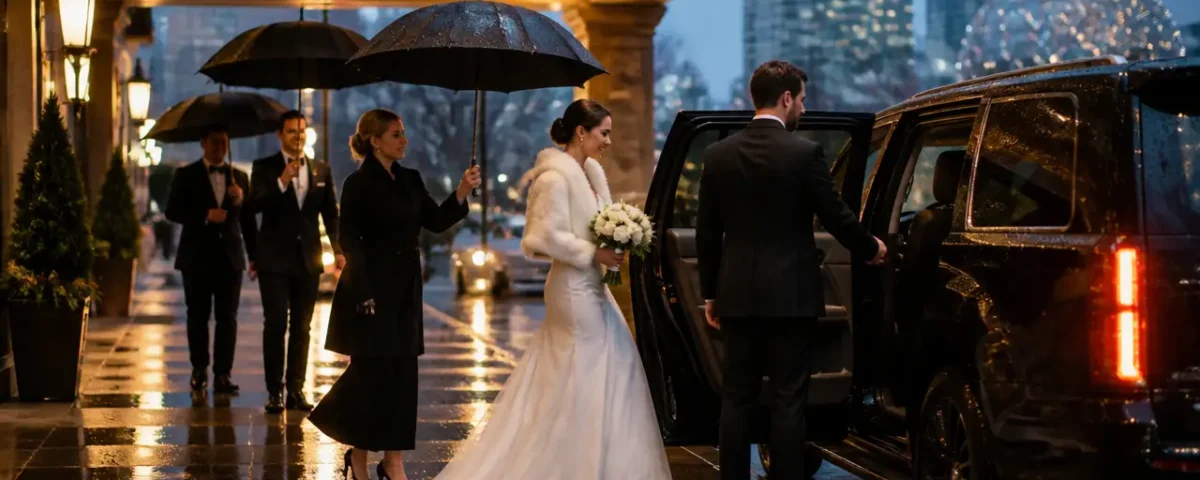
Vancouver winter wedding transportation needs to account for wet weather, limited daylight and guests moving between several locations. A route that looks simple on a summer schedule can become stressful when people are carrying formalwear, umbrellas, mobility aids or photography equipment.
Vancouver winters are generally mild rather than consistently snowy. At Vancouver International Airport, December climate normals show an average daily temperature of 3.9°C, with an average high of 6.6°C and low of 1.2°C. That makes rain, damp sidewalks and chilly curbside waits the main planning concerns for most Metro Vancouver weddings. You can review the official Vancouver climate normals when choosing clothing, arrival times and vehicle arrangements.
Build the route before choosing the vehicles
Start with a location map rather than a vehicle catalogue. List the ceremony venue, reception venue, hotel clusters, airport arrivals and any photo locations. Then identify which guests need transportation and when they must arrive. A wedding with guests staying downtown, in Richmond and in Surrey may need several coordinated pickups instead of one long loop.
For a smaller group, a sedan may be appropriate for the couple or immediate family. SUVs work well for small groups with luggage, garment bags or extra equipment. A Sprinter or mini-coach is usually more practical for a planned hotel-to-venue wedding shuttle. If guests are spread across Downtown Vancouver, Richmond, Burnaby, Surrey and North Vancouver, multiple vehicles can reduce backtracking and make the schedule easier to control.
Guests staying in Surrey may benefit from a dedicated pickup plan rather than being added to a downtown route. A local Surrey limousine service can be a useful option to discuss when building a Lower Mainland transfer plan.
Allow extra time for rain and wet-weather arrivals
Do not use a fair-weather driving estimate as the complete wedding schedule. In rainy conditions, allow guests an additional 15 to 30 minutes for each important pickup window. The extra time covers slower loading, wet footwear, coats, umbrellas, mobility devices and guests who need assistance reaching the vehicle.
Ask the venue these questions before finalizing the itinerary:
- Is there a covered loading area or sheltered entrance?
- Can the chauffeur wait at the entrance during guest loading?
- Where can vehicles safely stop without blocking emergency access?
- Is there enough room for a larger shuttle to turn around?
- Can the venue provide a dry place for umbrellas and coats?
For the couple, confirm whether the vehicle can provide sheltered curbside access. Keep a small supply of towels available for damp shoes or luggage, and consider garment protection if the wedding party will be entering directly from a wet sidewalk. The goal is simple: guests should spend as little time as possible standing outside trying to identify their vehicle.
Plan around Vancouver’s early winter sunset
Daylight affects more than photography. It changes the feel of venue arrivals, the visibility of entrances and the amount of time guests spend travelling after the ceremony. In December 2026, Vancouver’s sunset is approximately 5:13 to 5:18 p.m., with the earliest sunset around December 11. Check the Vancouver December sunset schedule when setting your ceremony and portrait timeline.
Schedule outdoor portraits earlier than you might in June, and leave enough daylight for guests to find the ceremony venue comfortably. If the ceremony ends after sunset, treat the trip to the reception as an evening transfer rather than trying to fit an outdoor photo stop into the same window. A vehicle waiting at the correct entrance can also help guests avoid walking across an unfamiliar property in the dark and rain.
Organize hotel, airport and guest transfers
A wedding guest shuttle works best when each passenger knows the pickup location, departure time and vehicle description in advance. Assign one transportation coordinator who can communicate with the venue, drivers and wedding party. Give that person a manifest containing guest names, phone numbers, hotel addresses and special requirements.
For airport guests, collect flight numbers, arrival terminals, hotel details and a group contact. YVR advises groups to allow approximately 45 to 60 minutes after flight arrival for pickup and to exchange contact information with the driver in advance. International-arrival passengers should exit at Door 17 on the International Arrivals Level and proceed to the Public Passenger Pickup area; drivers can wait in the free Cell Phone Waiting Area until the group is ready. Confirm current procedures through YVR’s group pickup guidance before the wedding.
Build a separate departure window for elderly guests, families with children and anyone staying at a different hotel. The last shuttle should not leave immediately after the reception unless every guest has a clear alternative. Schedule a final vehicle sweep for phones, coats, purses, gifts and other items before the driver leaves each venue.
Prepare for road conditions beyond the city
Make a road check 24 to 48 hours before the event, then review conditions again on the wedding day. This matters particularly for Whistler weddings, mountain venues, ferry connections and routes outside the urban core. Check DriveBC and ask the transportation provider about winter equipment, route closures, alternate roads and the contingency plan for delays.
British Columbia’s winter tire and chain rules apply to signed routes, with dates commonly running from October 1 to March 31 or April 30 depending on the route. They should not be interpreted as a blanket requirement for every Vancouver city street. If the itinerary includes Whistler or another mountain route, ask specifically how the operator prepares for that corridor and changing elevation. The provincial winter driving guidance is a useful starting point.
A simple day-of transportation checklist
- Confirm the final guest manifest and phone numbers.
- Send every guest the exact pickup point, not just the hotel name.
- Verify venue loading zones and sheltered entrances.
- Confirm driver contact details and the fallback meeting point.
- Review flight arrivals and road conditions.
- Keep umbrellas, towels and garment-protection supplies available.
- Leave a buffer between ceremony departure and reception arrival.
- Complete a vehicle sweep after each major transfer.
If the wedding weekend includes a next-day Fraser Valley outing for visiting family, a private wine-tour itinerary can help keep that separate from the wedding-day schedule; see Wine Tours for destination-planning ideas. Keeping leisure travel distinct from the ceremony and reception transfers makes the main event easier to manage.
When requesting a wedding transportation quote, provide the wedding date, ceremony and reception addresses, guest count, hotel clusters, airport arrivals, vehicle preferences and any Whistler or mountain travel. A route review before booking can reveal whether one shuttle is sufficient or whether separate vehicles will keep guests drier, calmer and on time.