Vancouver Ski Resort Transportation Guide for Winter 2026–27
October 29, 2026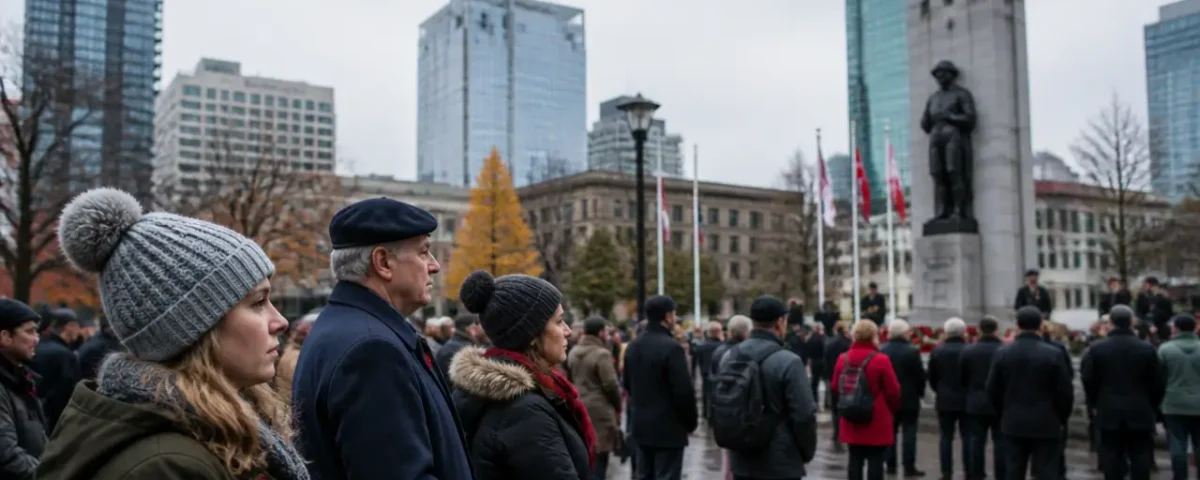
Vancouver Remembrance Day 2026 falls on Wednesday, November 11, and the safest transportation plan is to expect a busy downtown core, changing traffic controls and limited curb access near Victory Square. The City of Vancouver has listed Remembrance Day as a citywide event, but the official 2026 ceremony program and detailed closure schedule have not yet been published.
That distinction matters for anyone arranging a limousine, SUV, van or group shuttle. Use the information below as a planning framework, then confirm the final route and access conditions on the morning of the ceremony.
What is planned at Victory Square?
Vancouver’s principal civic Remembrance Day observance is held at the Cenotaph in Victory Square. The latest official program scheduled the service for 10 a.m., followed by parade activity through downtown. More than 15,000 participants and members of the public may attend, so the area around the square can become difficult to approach by car well before the service begins.
The 2025 program used downtown streets including Water Street, West Cordova Street, West Hastings Street, Richards Street, Homer Street, Cambie Street, Hamilton Street and West Pender Street. These streets are a useful planning reference, not a confirmed 2026 route. The City may change the parade path, traffic-control points and timing.
Vancouver Remembrance Day 2026 road closures
Do not rely on a regular downtown route or assume that a vehicle can stop directly beside the Cenotaph. Parade staging, pedestrian controls and police direction may restrict access with little practical room for drop-offs. Construction and other special events can add delays to the same corridors.
Before leaving, check the City’s Road Ahead current road closures map and its official roadwork information. The Road Ahead data is updated hourly on weekdays from 7 a.m. to 7 p.m.; checking it on the morning of November 11 gives you a better picture of active restrictions than relying on a route planned weeks earlier.
The City has also identified major 2026 construction activity, including Georgia Viaduct rehabilitation beginning in September. That work should be treated as a possible source of background congestion rather than described as a Remembrance Day closure. Exact closure streets and hours should remain unconfirmed until the City releases its event notice.
Arriving before the 10 a.m. service
For the ceremony, aim to arrive early and arrange the final approach on foot. A practical private-vehicle plan is to select a passenger meeting point several blocks outside Victory Square, complete the drop-off before the busiest pedestrian movement begins, and avoid asking the driver to wait at the curb near the Cenotaph.
For a hotel pickup, allow at least 30 to 60 minutes more than the normal downtown travel time. The buffer should cover loading luggage or mobility equipment, traffic diversions, a longer walking route and the possibility that the first proposed meeting point becomes inaccessible.
Give every passenger one clear location rather than making several curbside stops. Waterfront, Stadium–Chinatown or a downtown hotel entrance outside the immediate event footprint may work better than trying to collect people beside Victory Square. The best location will depend on the final closure map and the direction from which the vehicle approaches.
Transit planning for the holiday
TransLink has historically operated buses, SkyTrain and SeaBus on a Sunday or holiday schedule for Remembrance Day. The West Coast Express has not operated under the latest service notice, and the system observes a moment of silence at 11 a.m. The 2026 operating notice should be checked when published rather than assumed from an earlier year.
TransLink has also previously provided free travel for veterans and members of the Canadian Armed Forces, police, fire, ambulance, Coast Guard and eligible Fisheries and Oceans personnel. Eligibility, identification requirements and hours can change, so passengers should confirm the 2026 policy directly with TransLink.
Statutory-holiday fare treatment and service details should likewise be verified shortly before travel. A transit journey can be useful for passengers who are comfortable walking from a station, while a pre-arranged private vehicle is often more practical for older guests, families carrying equipment or groups that need to remain together.
Planning a group ride or limousine
Group transportation works best when the itinerary is built around staging rather than direct access to the ceremony site. Give the operator a passenger manifest, one primary contact and one backup contact. Include the hotel name, the agreed meeting point, accessibility needs and the time passengers must be collected after the ceremony.
Plan the day in three phases: early arrival before 10 a.m., the 11 a.m. moment of silence and parade movement, and the post-ceremony departure. The latter two periods are likely to create the greatest conflict between pedestrians and vehicles. A vehicle may need to remain outside the closure zone until police or event staff permit movement.
If guests are travelling from the suburbs, coordinate one central pickup point instead of sending a large vehicle to multiple residential addresses. For example, visitors coming from Surrey may benefit from arranging a Surrey limousine service to bring the group to one downtown staging location, then using a walking route for the final blocks.
Some groups may continue to a separate Fraser Valley gathering after the ceremony. If that onward plan includes wineries, arrange it as a separate leg with its own timing and passenger count through a specialist Fraser Valley wine tour resource; do not assume that a downtown ceremony pickup can transition directly into a second itinerary while roads remain controlled.
Accessibility and weather considerations
November weather can mean rain, wind, wet pavement and reduced daylight. Ask the transportation provider about the vehicle’s step height, interior space and ability to accommodate mobility devices. Confirm whether passengers can be dropped at a location with a reasonably direct, level walking route, since the closest curb may not be available.
Passengers should wear weather-appropriate footwear and bring a waterproof layer. A designated indoor meeting point, such as a hotel lobby, can be more reliable than a street corner if the group is waiting for a post-ceremony pickup.
Same-day checklist for November 11
- Confirm the City’s 2026 ceremony program, parade route and traffic bulletin.
- Check the Road Ahead map and current construction information before departure.
- Verify TransLink’s holiday schedule, West Coast Express service and any free-travel policy.
- Send every passenger the same meeting point and the driver or group leader’s phone number.
- Keep the vehicle outside the immediate Victory Square footprint unless authorities direct otherwise.
- Allow extra time for the 11 a.m. moment of silence, parade movement and post-ceremony pedestrian traffic.
The most dependable Vancouver Remembrance Day 2026 transportation plan is flexible: arrive early, stage outside the event zone and treat the final road directions as changeable. Booking a vehicle in advance helps with coordination, but no operator can guarantee direct curb access when event staff and police are managing downtown streets.