Vancouver Halloween 2026 Transportation Guide for Safe Late-Night Rides
October 10, 2026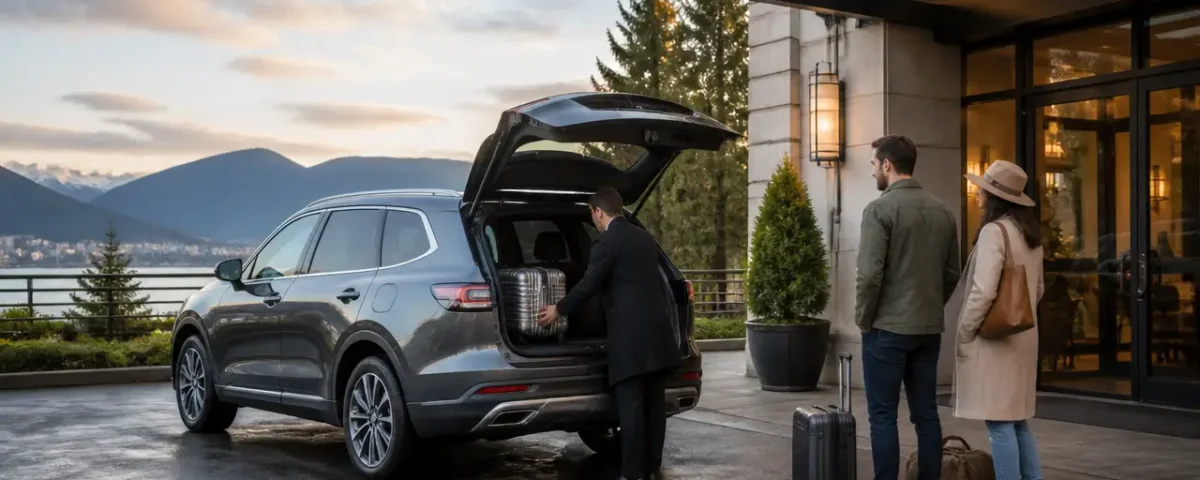
Vancouver to Seattle private car transfers are easiest to plan when the border crossing is treated as a variable part of the journey, not as a fixed number of minutes. Your schedule has three separate sections: the trip from the pickup address to the border, the inspection process, and the drive from the first U.S. port of entry to your Seattle destination.
A chauffeur can plan a sensible buffer, monitor the route and adjust the pickup strategy, but no legitimate service can guarantee an exact arrival time at the border or in Seattle. Weekends, holidays, summer travel, major events, traffic approaching the crossing and secondary inspection can all change the timetable.
How to plan realistic Vancouver–Seattle travel time
The Pacific Highway and Douglas crossings both connect Surrey, British Columbia, with Blaine, Washington. The best option can depend on your pickup location, traffic conditions and the current border situation. Before departure, check the official CBSA border wait-time page. Its displayed figures are useful for comparison, but they do not include delays on the roads leading to the port of entry.
For an important appointment, flight or event in Seattle, provide the chauffeur with the true arrival deadline rather than only the requested pickup time. That makes it possible to work backward from the destination and allow extra time for busy travel periods. A tight schedule immediately after the border is risky, particularly if an officer sends a passenger or the vehicle to secondary inspection.
Documents should be ready before the vehicle arrives
Every traveler needs to confirm their own eligibility to enter the United States. Requirements vary according to citizenship, immigration status and visa category. Qualifying U.S. citizens entering by land or sea may use documents such as a passport, passport card, enhanced driver’s license or eligible trusted-traveller card, but travelers should verify their specific situation through current U.S. government guidance.
Eligible Visa Waiver Program travelers entering by land generally need an approved ESTA. U.S. Customs and Border Protection recommends applying in advance—at least 72 hours before anticipated arrival—rather than leaving the application until the day of travel. Some passengers may also require a provisional I-94. The process and fee can change, so check the current CBP I-94 payment information before booking.
Keep passports, visas, ESTA or I-94 details, prescriptions and supporting documents in an accessible personal bag. Border clearance takes place at the first U.S. port of entry, so these items should never be buried under luggage in the vehicle.
Pickup planning from Vancouver hotels, homes and YVR
At the time of booking, provide the complete pickup address, hotel name, building entrance, a mobile contact number and any preferred curb location. Downtown towers, residential buildings and hotels may have different loading procedures. If the party is being collected in New Westminster, for example, confirming the entrance and curb instructions ahead of time helps avoid unnecessary waiting; travelers can also review New Westminster limousine transportation options when comparing local service coverage.
For YVR, the meeting plan should identify the terminal and arrival type. Passengers arriving from international destinations or the United States are directed to exit through Door 17 on the International Arrivals Level and proceed to the Public Passenger Pickup area. The curb is intended for immediate loading, while drivers waiting for passengers should use the airport’s Cell Phone Waiting Area. Confirm the current instructions on YVR’s pickup and drop-off guidance before travel.
Flight tracking helps, but it should be paired with a clear meeting procedure. For groups arriving on different flights, base the request on the latest scheduled arrival and tell the chauffeur how the group will contact one another after collecting bags. This is more reliable than assuming every passenger will reach the curb at the same time.
Choose the vehicle around luggage, not just passenger count
A vehicle that seats six people may not have room for six large suitcases, carry-ons and equipment. When requesting a quote, disclose the number and approximate size of bags, along with golf clubs, skis, bicycles, strollers, wheelchairs or other bulky items. The information may affect whether a sedan, SUV or larger vehicle is suitable.
Soft-sided luggage is often easier to load efficiently. Label every bag, keep electronics and medication in a personal carry-on, and separate border documents from items that may be difficult to reach. If the group needs help moving heavy luggage at YVR, the airport lists an independent licensed porter service; porter assistance is not automatically part of a private chauffeur booking.
Food, plants, agricultural products, wildlife items and some medications can raise questions at the border. Declare items when required and check current CBP rules before departure. Travelers must also declare currency or monetary instruments exceeding $10,000 USD. When uncertain, asking in advance and declaring honestly is safer than assuming an item is permitted.
Seattle drop-off details matter too
Give the transportation company the exact Seattle destination, not just “downtown.” A hotel, private residence, cruise terminal, office tower or airport may have different loading points and access restrictions. Include the arrival time for any onward flight, meeting or event, and avoid scheduling it immediately after the estimated border arrival.
If your plans include a later leisure trip through the Fraser Valley, a separate private wine-tour itinerary can be arranged around winery visits rather than added casually to a time-sensitive Seattle transfer. Keeping the cross-border journey and local sightseeing as separate bookings makes the schedule easier to manage.
Booking checklist for a cross-border car transfer
- Confirm every passenger’s U.S. entry documents, ESTA or visa requirements.
- Share the exact pickup address, entrance and contact number.
- Provide flight numbers for airport pickups and identify the latest arriving passenger.
- List suitcases, carry-ons, sports equipment and mobility devices.
- Build a border buffer for weekends, holidays, events and possible secondary inspection.
- Confirm the Seattle drop-off address and any fixed arrival deadline.
- Review the company’s wait-time, cancellation and cross-border terms before paying a deposit.
A private car is most useful on this route when the reservation is built around the border, documents and luggage from the beginning. Share complete information, check official guidance close to departure and leave the schedule enough room to absorb an inspection delay.